
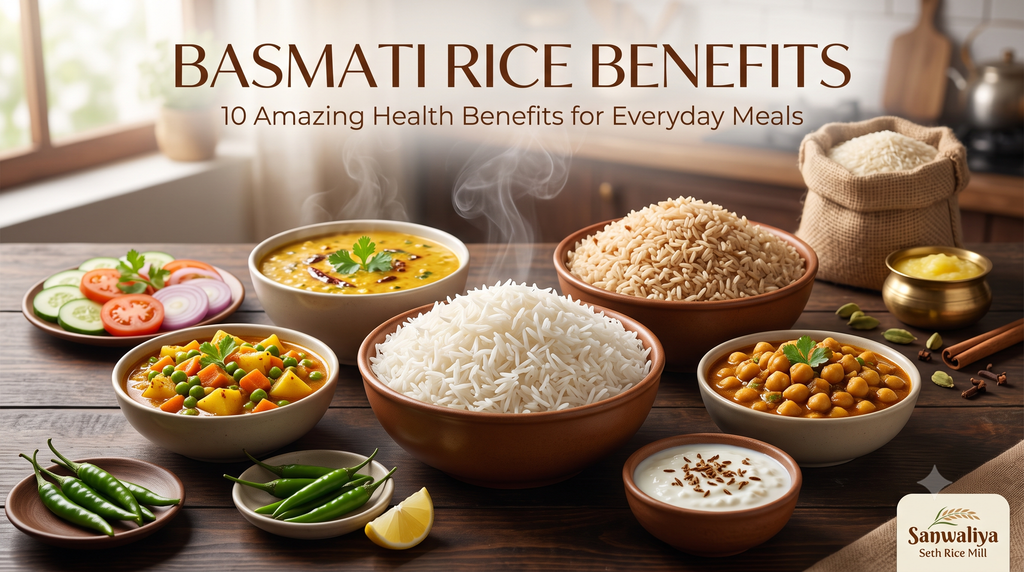
Basmati rice benefits make this fragrant grain a top choice for families. Furthermore, it delivers a delicious taste and satisfying texture. As a result, it remains a beloved staple in Indian kitchens for daily dining and festive celebrations.
In addition to its culinary appeal, this traditional food provides clean complex carbohydrates. These carbohydrates supply steady energy for routine tasks. Moreover, quality varieties contribute plant protein, dietary fibre, and vital micronutrients
Why Basmati Rice Is an Everyday Kitchen Staple
Understanding the nutritional value of basmati rice helps you build wholesome plates for your entire family. Therefore, let us explore the top 10 reasons to include this grain in your daily diet.
1. Basmati Rice Benefits for Daily Energy
Basmati rice provides complex carbohydrates that serve as a primary fuel source. Furthermore, these starches break down steadily into glucose. As a result, your body receives sustained energy for daily physical and mental tasks.
In addition to lasting stamina, quality grains supply plant protein and micronutrients. Therefore, selecting pure grains from trusted suppliers like Sanwaliya Seth Rice Mill ensures fresh, unadulterated food. Consequently, you enjoy reliable daily vitality.
2. How Basmati Rice Supports Digestion
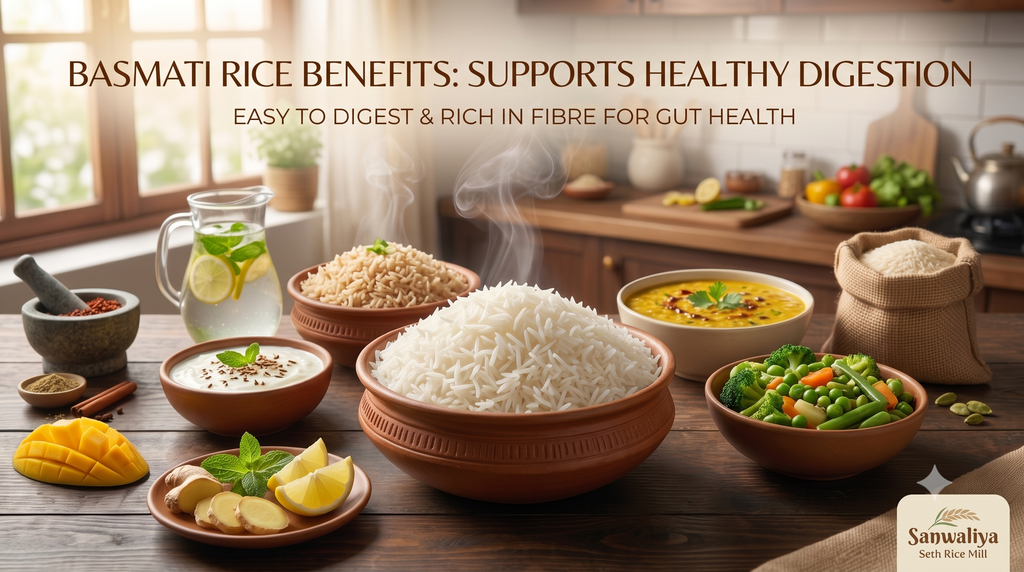
White basmati is naturally low in fibre. Consequently, it is gentle on the stomach and easy to break down. For example, pairing it with light dal and steamed vegetables creates a mild, soothing meal.
However, individual digestive responses can vary. On the other hand, brown basmati retains its nutrient-dense bran layer. As a result, it provides more dietary fibre to support regular bowel movements. Therefore, combining rice with vegetables, lentils, and sufficient water ensures optimal digestive wellness.
3. Nutritional Value of Basmati Rice
Understanding basmati nutrition helps you make informed dietary decisions. Primarily, this grain provides carbohydrates along with small amounts of plant protein.
However, nutrient levels vary depending on processing. For instance, white varieties offer fast-digesting energy. In contrast, brown basmati preserves essential vitamins and minerals within its outer bran layer. Furthermore, serving sizes influence your total intake. Therefore, you should always balance your plate with fresh vegetables, pulses, and curd..
4. Fat Content and Cooking Methods
Plain cooked basmati contains virtually no fat when prepared without butter or ghee. Consequently, it fits easily into calorie-conscious diets. For example, simple steamed rice with yellow dal offers a clean, wholesome option.
However, cooking styles significantly alter the overall nutritional profile. For instance, restaurant-style biryanis and fried preparations carry much higher fat levels. Therefore, use moderate amounts of oil at home. In addition, choose steaming or boiling to keep your meals light.
5. Including Rice in a Balanced Diet
A healthy lifestyle requires a balance of carbohydrates, protein, fats, vitamins, and minerals. Fortunately, basmati fits seamlessly into this dietary framework. You never need to eliminate grains to maintain wellness. Instead, focus on sensible portion control.
For instance, a traditional Indian thali combines steamed rice with dal, seasonal sabzi, and fresh curd. Together, these foods supply complete nutrition. Furthermore, brown basmati provides extra fibre, while white basmati remains an easily digested staple.
6. Delicious Ways to Enjoy Basmati Rice
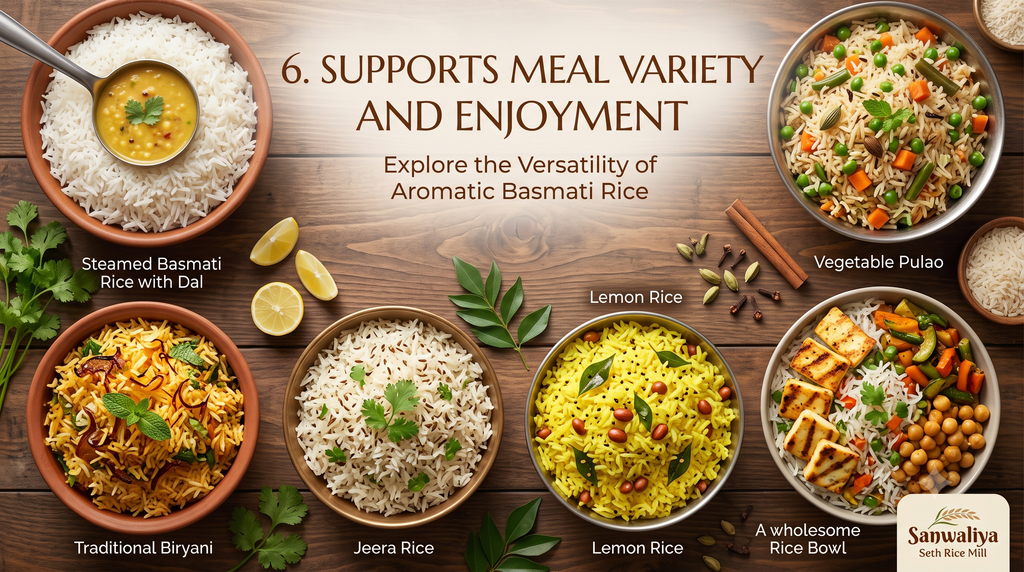
One of the greatest basmati rice benefits is its remarkable culinary versatility. Because the grains remain slender and separate, they adapt to many classic recipes.
Popular options include:
- Steamed rice paired with homestyle dal
- Fluffy vegetable pulao
- Fragrant jeera rice
- Tangy lemon rice
- Festive celebration biryani
Moreover, proper preparation makes a huge difference. Therefore, soak your grains for 20 minutes before steaming. As a result, you achieve long, fluffy grains with an inviting aroma.
7. Brown Basmati Rice and Dietary Fibre
Dietary fibre is essential for smooth bowel movements and gut health. Fortunately, brown basmati retains its fibrous bran coating. Therefore, it provides considerably more roughage than polished white rice.
If you wish to increase daily fibre, rotate brown basmati into your meals. Similarly, you can pair regular rice with lentils, chickpeas, and beans. White basmati offers a softer texture for sensitive digestion. Thus, you can choose the right variety for your personal digestive needs.
8. Rice and Weight Management
Many people wonder whether basmati rice can support weight management. In reality, moderate servings fit comfortably into balanced plans. Rice does not cause weight gain on its own. Instead, total calorie balance determines weight changes over time.
Therefore, pair a sensible serving of rice with high-protein sides like lentils, paneer, or eggs. In addition, fill half your plate with fresh greens. As a result, you stay full longer without consuming excessive calories.
9. Choosing Rice for Everyday Family Meals
Basmati rice easily suits different preferences within a family. For example, children enjoy soft rice with warm dal. Meanwhile, adults often prefer spiced curries or vegetable pulao.
Furthermore, different family members have distinct nutritional requirements. Therefore, meals should adapt to varying activity levels. For individuals managing blood sugar, moderation is key. In addition, pairing rice with protein and fibre helps regulate glucose absorption effectively.
10. Aroma, Texture and Flavour
A distinct aroma and delicate, fluffy texture make basmati famous worldwide. Quality grains enhance your dining experience without requiring complex cooking techniques.
Furthermore, well-aged basmati cooks without clumping. Consequently, your everyday meals look appealing and taste delicious. To preserve freshness, store raw grains in a clean, airtight container. In addition, keep the container in a cool, dry place.
Tips for Enjoying Rice in a Healthy Diet
Adopt these simple habits to keep your rice dishes balanced and nutritious:
- Control portions: Match your serving size to your daily physical activity.
- Add vegetables: Include plenty of colourful seasonal produce on your plate.
- Include protein: Pair each serving with dal, legumes, sprouts, or paneer.
- Use gentle cooking: Limit heavy oils and opt for simple steaming.
- Store properly: Keep your uncooked grains sealed in moisture-proof containers.
These habits can help you enjoy your favourite dishes as part of a varied diet.
Choose Quality Basmati Rice from Sanwaliya Seth Rice Mill
The quality of raw paddy directly impacts the fragrance and texture of cooked rice. Therefore, choosing a dependable producer ensures consistent results in your kitchen.
Sanwaliya Seth Rice Mill delivers premium-grade basmati rice crafted for everyday family meals and special gatherings. Furthermore, careful processing preserves natural grain length and purity. As a result, your homemade dishes turn out fragrant and delicious every time.
Explore our basmati rice products to learn more about the options available.

Final Summary
In conclusion, the primary basmati rice benefits include sustained energy, cooking versatility, and gut comfort. Brown varieties supply higher dietary fibre, whereas white basmati provides light, easy digestion.
However, no single ingredient provides complete nourishment by itself. Therefore, mindful portions and balanced side dishes remain essential. Pair basmati with wholesome lentils and vegetables to enjoy delicious, health-focused meals every day.
For more information just click on our SOCIAL MEDIA ICONS GIVEN BELOW
FACEBOOK , INSTAGRAM
Q: What are the primary health benefits associated with Basmati rice?
A: Basmati rice is valued in a balanced diet for several evidence-based nutritional attributes:
1. Lower Glycemic Index: Compared to many standard short-grain white rices, Basmati has a lower-to-medium GI (typically around 50–58), supporting steadier post-meal glucose absorption.
2. Naturally Gluten-Free: Safe and easily digestible for individuals with celiac disease or non-celiac gluten sensitivity.
3. Heart-Healthy Profile: Naturally virtually fat-free, cholesterol-free, and very low in sodium.
4. Digestive Ease: Well-milled, aged Basmati is gentle on the gastrointestinal tract and suitable for sensitive stomachs.
5. Micronutrient Content: Provides essential B-vitamins (such as thiamine and niacin) and minerals like iron, zinc, and phosphorus.
6. Lower Arsenic Accumulation: Studies consistently indicate that Basmati grown in traditional Himalayan foothills tends to accumulate less inorganic arsenic than many other cultivated rice varieties.
7. Higher Amylose Content: Its higher ratio of amylose to amylopectin prevents rapid starch breakdown and keeps grains distinct.
8. Good Source of Clean Energy: Supplies complex carbohydrates needed for sustained daily energy and glycogen replenishment.
9. Satiety Management: Because of its firmer starch structure, it digests more slowly than sticky rices, helping curb premature hunger spikes.
10. Nutrient-Dense in Whole-Grain (Brown) Form: Brown Basmati delivers higher dietary fiber, antioxidants, and magnesium, further supporting metabolic and cardiovascular health.