
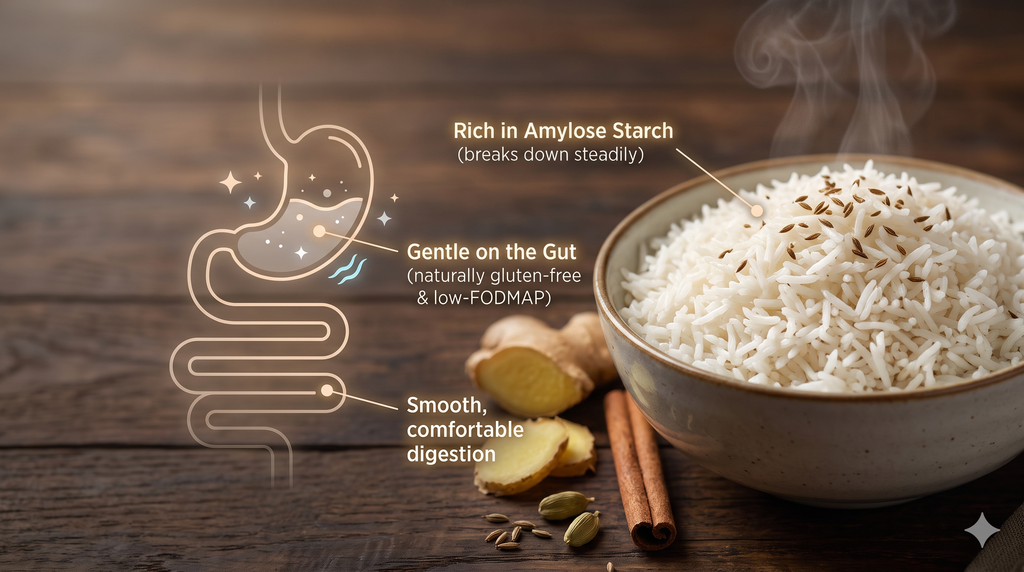
Many people navigating gut sensitivity, bloating, or acid reflux ask a common question: is basmati rice easy to digest? Rice remains a dietary staple for more than half the world’s population, but not all grains behave the same way in your gastrointestinal tract. Basmati rice, celebrated for its slender grains and distinctive aroma, stands out not just for its culinary appeal, but also for its exceptionally gentle impact on the stomach.
The short answer is yes—basmati rice is widely regarded as one of the most digestive-friendly carbohydrates available. The exact reasons why—and how white versus brown varieties compare—come down to starch composition, processing, and traditional preparation methods.
Why Is Basmati Rice Easy to Digest?
To understand how easily rice moves through your gastrointestinal tract, you have to look at the structure of its starches: amylose and amylopectin.
Rice contains both starches, but the ratio between them determines how the grains cook and how digestive enzymes break them down:
- Amylose: A long, straight-chain carbohydrate that digests more slowly and keeps cooked grains separate and firm.
- Amylopectin: A highly branched carbohydrate that digests rapidly and produces a sticky, clumped texture.
Basmati rice has a significantly higher proportion of amylose compared to standard short-grain or sticky rice. Because amylose breaks down at a steady, manageable pace, it does not ferment erratically in the gut or place immediate, heavy demands on your digestive enzymes. This balance prevents the sluggish, overly full sensation often triggered by dense, glutinous starches.
Furthermore, basmati rice is naturally gluten-free, eliminating common digestive triggers associated with wheat and barley.
White Basmati vs. Brown Basmati: Digestibility Compared
When assessing whether basmati rice is easy to digest, distinguishing between white and brown variations is crucial. Both offer digestive benefits, but they serve different dietary needs.
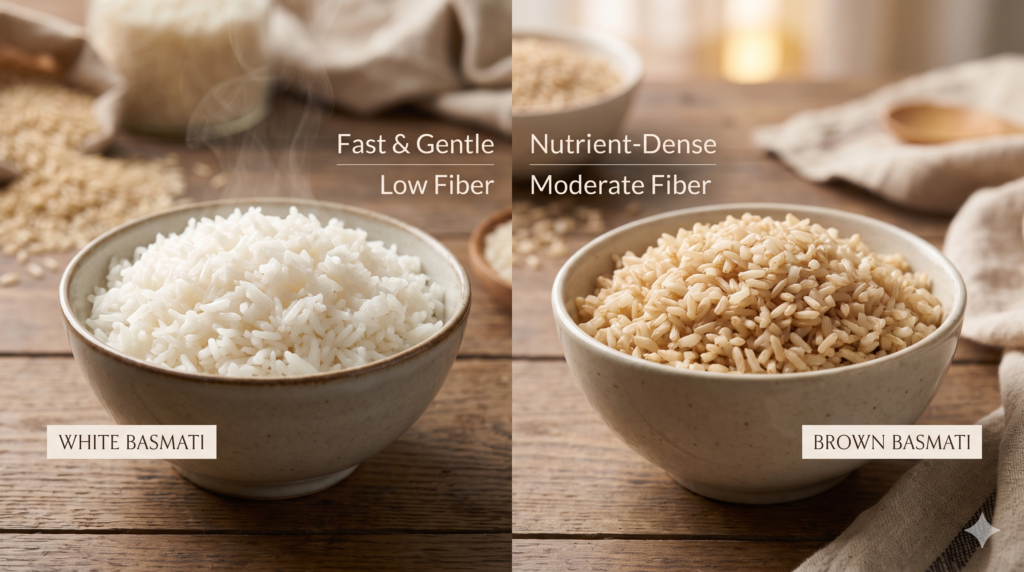
| Feature | White Basmati Rice | Brown Basmati Rice |
| Fiber Content | Low (approx. 0.5g–1g per cup) | Moderate (approx. 3g–4g per cup) |
| Ease of Digestion | Very high; rapid breakdown | Moderate; requires more mechanical breakdown |
| Best Used For | Sensitive stomach, flare-ups, acid reflux | Long-term gut regularity, cardiovascular health |
| Phytic Acid Levels | Very low | Present in the bran layer |
| Glycemic Index | Medium (around 55–58) | Low to Medium (around 50–54) |
1. White Basmati Rice
During milling, the outer husk, bran, and germ are removed from white basmati. While this reduces total fiber, it also removes insoluble roughage and anti-nutrients like phytic acid. For individuals recovering from an upset stomach, gastritis, or flare-ups of conditions like Irritable Bowel Syndrome (IBS), white basmati rice provides clean, easily accessible energy without aggravating the intestinal lining.
2. Brown Basmati Rice
Brown basmati retains its nutrient-dense bran layer and germ. This variety contains higher levels of insoluble fiber, which supports regular bowel movements and feeds beneficial gut microbes. However, for someone with active gut inflammation or reduced stomach acid, the fibrous bran can feel heavier and take longer to process.
Digestive and Health Benefits of Basmati Rice
1. Supports Stable Blood Sugar
Standard white rice often carries a high glycemic index (GI), leading to rapid blood sugar spikes followed by crashes that can leave you fatigued. Basmati rice naturally possesses a lower-to-medium glycemic index compared to jasmine or arborio rice. The amylose-rich starch structure ensures glucose releases steadily into the bloodstream, making it a gut-friendly choice for sustained metabolic energy.
2. Low FODMAP Compatibility
Fermentable Oligosaccharides, Disaccharides, Monosaccharides, and Polyols (FODMAPs) are short-chain carbohydrates notorious for causing bloating, gas, and abdominal cramps in sensitive individuals. Basmati rice is classified as a low-FODMAP food. If you follow a low-FODMAP protocol for gut rehabilitation, including basmati rice provides satisfying calories without prompting gas buildup.
3. Naturally Gentle on the Stomach Lining
Unlike legumes, cruciferous vegetables, or seeds high in enzyme inhibitors, cooked white basmati produces minimal residue and gas. This quality makes it a central ingredient in gentle recovery meals worldwide, such as traditional Indian khichdi or simple rice broths.
How to Prepare Basmati Rice for Optimal Digestion
Even a naturally light grain can become heavy if undercooked or prepared with excessive fats. To ensure your rice remains gentle on the gastrointestinal tract, apply these traditional culinary practices:
1. Rinse Thoroughly
Place the measured rice in a bowl of cool water and swirl it gently with your fingers. Drain and repeat until the water runs clear. This step washes away excess surface starch that can cause the grains to clump together and turn gummy, resulting in a cleaner texture that the stomach processes easily.
2. Soak Before Boiling
Soak basmati grains in fresh water for 20 to 30 minutes before cooking. Soaking allows the starch molecules to absorb moisture evenly to the core. This not only elongates the grain during cooking, but it also begins softening the internal structures, significantly reducing the digestive workload required by your body.
3. Incorporate Carminative Spices
Cooking basmati with digestive spices improves gastric juice secretion and helps eliminate gas:
- Cumin seeds (Jeera): Stimulates digestive enzymes.
- Fresh ginger: Accelerates gastric emptying.
- Cardamom or cloves: Adds warmth and eases abdominal cramping.
- A small pinch of rock salt: Balances electrolyte absorption.
What the Research Says About Amylose and Resistant Starch
An interesting property of basmati rice occurs after it has been cooked and cooled. Cooling cooked basmati rice (for instance, overnight in a refrigerator) causes part of the starch to reorganize through a process called retrogradation.
This process produces resistant starch, a form of carbohydrate that bypasses digestion in the small intestine and journeys directly to the colon:
- In the colon, friendly gut flora ferment this starch into short-chain fatty acids (SCFAs), particularly butyrate.
- Butyrate serves as the primary energy source for your colon cells, helping maintain a strong gut barrier and lowering inflammation.
- If you want the prebiotic benefits of resistant starch, cook your basmati, let it chill, and then gently reheat it before eating.
Frequently Asked Questions
Can basmati rice cause constipation?
White basmati rice is low in fiber. If consumed in large portions without sufficient hydration or vegetables, it may slow transit times for some individuals. To maintain healthy regularity, pair white basmati with soluble fiber sources such as stewed squash, carrots, or well-cooked lentils.
Is basmati rice suitable for acid reflux?
Yes. Its low fat content and bland, non-irritating nature mean it does not stimulate excess gastric acid production. It can help absorb stomach acids when consumed alongside lean proteins and mild broths.
Does aged basmati digest better than new crop rice?
Yes. Quality basmati is traditionally aged for one to two years. Aging reduces moisture content, concentrates the aroma, and alters the starch matrix so the grains cook up fluffier and separate easily. This dry, non-sticky consistency makes aged basmati noticeably lighter on the stomach than newly harvested grains.
The Verdict
So, is basmati rice easy to digest? Without question. Thanks to its balanced amylose starch content, lack of gluten, low FODMAP rating, and low levels of irritating compounds, basmati rice is one of the most digestive-friendly complex carbohydrates you can include on your plate.
If you are dealing with acute digestive discomfort or prefer a fast-digesting source of clean energy, opt for rinsed and soaked white basmati. If you want sustained energy, prebiotic support, and regular bowel habits, incorporate brown basmati into your meals. Cooked properly with mild spices, basmati rice delivers comforting nutrition while treating your gut with care.
if you want to know about OUR PRODUCTS you can reach us by clicking on the link
you can also visit our social media pages as well by clicking on the links given below
FACEBOOK , INSTAGRAM , WHATSAPP
Is basmati rice easy to digest compared to other rice types?
Yes. Basmati rice is rich in amylose starch, which keeps the grains separate, light, and non-sticky. This unique starch structure allows digestive enzymes to break down the grain at an even, steady rate without causing the heaviness or gas often linked with stickier, glutinous rice varieties.